The Open Cycle Project
Making menstrual and reproductive health open, understandable, and accessible for anyone that wants to learn
Gaps in research and education have left menstrual and reproductive health widely misunderstood-- sometimes with serious consequences. The Open Cycle Project works to close that gap by providing clear, inclusive, and accessible information for all
Learn More
About
The Open Cycle Project was created to address the lack of clear,
inclusive, and accessible menstrual and reproductive health education.
Many people grow up without detailed education about their own bodies. This leads to confusion, stigma, and missed signs of potential health issues. The Open Cycle Project provides short-form educational content, accessible resources, and (in the future) tools designed to help better understand their bodies. This project is built on the belief that education should be inclusive, judgement-free, and available to anyone who wants to learn.
Founder
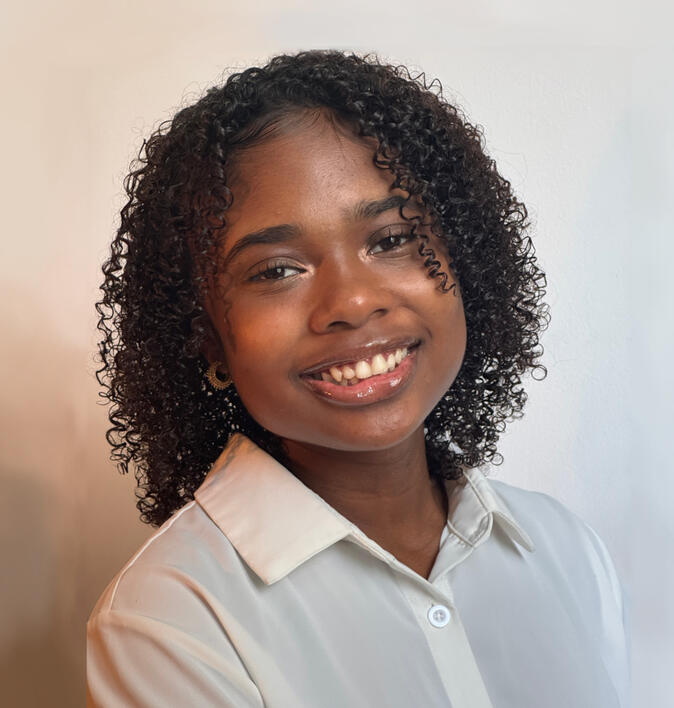
My name is Arianna John and I am the founder of The Open Cycle Project! I'm a dual enrollment high school student and Director of Communications for the Polis Project: a student-led civic literacy organization, but my passion for accessible education goes far beyond politics and into something more personal: what we're not taught about our own bodies.I started this project after noticing a large gap between what my peers and I were taught in school and what we should have known. Basic questions about menstruation were met with stigma or silence, and misinformation took the place that should have been occupied by real education. I wanted to change that.Since launching, The Open Cycle Project has produced educational short-form content across Youtube, Instagram, and TikTok, and conducted preliminary peer research showing measure gaps in reproductive health knowledge -- and our ability to close them. This project is built on the belief that health literacy is a right, not a privilege, and that anyone who wants to understand it deserves clear, judgement-free information to do so.
(Personal Profiles)
Resources & Education
The Open Cycle Project creates original short-form educational content and curates resources from trusted medical sources. We are a student-led educational platform, not a medical provider. All content is intended for general educational purposes only and does not constitute medical advice. Always consult a qualified healthcare provider for personal health concerns.
Our Videos:
Anatomy & How It Works:
Periods & Menstruation:
Further Reading & Trusted Sources
The following resources come from established medical and public health organizations. We reference these sources when creating our content.
Preliminary Research & Impact
The Open Cycle Project is committed to not just creating content, but measuring whether it works. Below are the results of our first preliminary study, conducted in May 2026.
Study Goal
To measure baseline knowledge of reproductive anatomy among peers and evaluate whether a single short-form educational video could produce a measurable improvement in understanding.Method
An anonymous pre/post survey was distributed via Google Form to 15 participants. Participants answered questions about reproductive anatomy, watched a short educational video, then completed the same questions again.
Key Findings
| Question | Before Video | After Video |
|---|---|---|
| Correct understanding of egg release at ovulation | 6.7% (1/15) | 66.7% (10/15) |
| Correct understanding of fimbriae function | 26.7% (4/15) | 100% (15/15) |
Before the video, 53.3% of participants believed the egg travels directly into the fallopian tube — one of the most common misconceptions in reproductive anatomyAfter the video, 100% of participants correctly identified the role of the fimbriae100% of participants reported the video changed or somewhat changed their understanding
What Participants Said:
"I didn't know that fimbriae were a thing."
"The ovaries are not connected to the fallopian tubes"
"Honestly all of this was new to me."
Limitations
This is a small preliminary study with a sample of 15 peers and findings are not statistically generalizable to broader populations. Participant recruitment was informal and the sample may not represent diverse age groups or educational backgrounds. We are actively working to expand this research to a larger and more diverse participant pool.
We are currently expanding this study. If you'd like to participate,
please only participate if you have not already seen our video about the female reproductive system
Contact/ Get Involved
Want to collaborate? Share your story, or suggest a topic. Reach out!
Want to be a volunteer?
Volunteer ExpectationsMost volunteer roles require around 1-3 hours per weekAll work is completed remotelyVolunteers are expected to communicate
professionally and respectfullyVolunteers should be committed to providing
accurate and evidence-based informationSelection ProcessSubmit an application.
Selected applicants may be invited to a short interview.
Accepted volunteers will complete a brief onboarding process.Submission Deadline:
November 1st 2026